Archive for the ‘DC’ Category

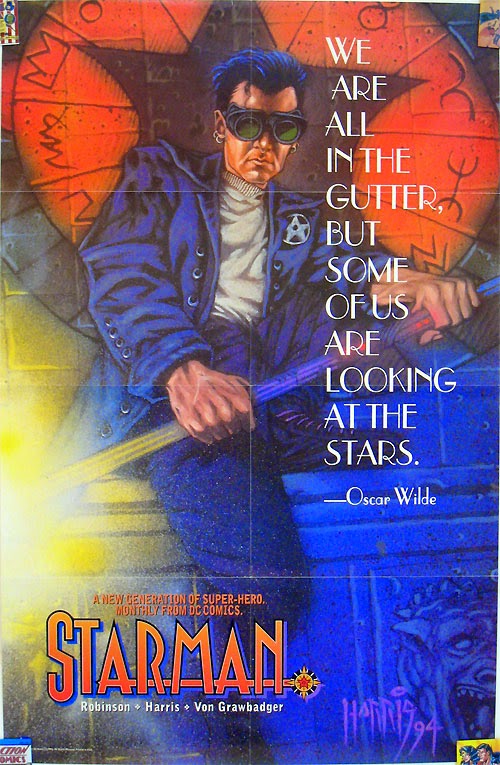
Promotional ad for Starman #0

Starman is a character that dates back to the Golden Age of Comics. For those who didn’t bother with the link, the Golden Age was a time from about 1938 to 1950 when superhero comic books were churned out like crazy and comic publishing became a big business. Many of DC’s sizeable stable of characters were created in this period. Among them was Ted Knight AKA Starman, a science-hero from the 1940’s who had a baton that enabled him to fly and shoot energy beams. It was powered by star-light, hence the name. The character was a member of JSA and All Star Squadron where he was often overshadowed by his teammates and rarely got a chance to shine (Ha! Puns). The character languished until he was revived in a post-Zero Hour series in the mid-90’s created by James Robinson and Tony Harris.

(more…)

Comic-Con International in San Diego has recently wrapped up its 2014 programming. This year, there was a huge focus on comic-based television. The fall TV schedule brings us The Flash, Gotham, Agent Carter and Constantine (plus iZombie as a mid-season replacement). Combine that with returning shows Arrow, The Walking Dead and Agents of SHIELD and it seems that the box office dominance of comics is making it’s way to the small screen. They’ve always had a presence in television (dating all the way back to George Reeves as Superman) but it’s only recently that it’s become so accepted in the mainstream. I realize shows like Batman: The Animated Series and JLU were popular and critically acclaimed, but they failed to capture the general public in the same manner that we’re currently seeing. In fact, almost every live-action comic-based show in the last 15 years failed spectacularly.
(more…)

**This is a new column where I (or other writers) take a look at comic book characters who either haven’t been adapted to other media or haven’t been adapted respectfully.**

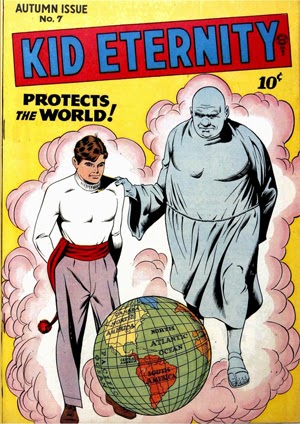
The Kid and Mr. Keeper

I’ll start things off with an oft forgotten character who, to date, has been referenced a whopping ZERO times in any form of expanded media: Kid Eternity. The Kid was created by Quality Comics in 1942 for a series called Hit Comics and made frequent appearances before getting his own ongoing series. Originally, the character was not given a proper name. He was only ever referred to as Kid, most likely as a way of creating a cypher that young readers could identify with and more easily imagine themselves in his sneakers.
(more…)

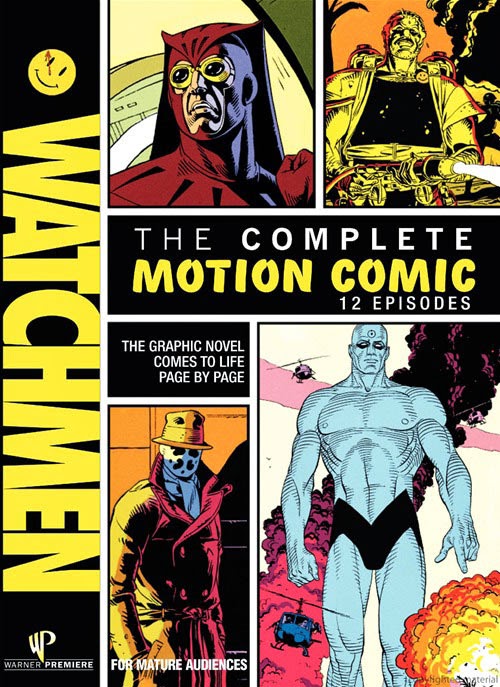
Watchmen (2009 motion comic)

Posted: July 21, 2014 in DC, Watchmen

2009 was supposed to be the year of Watchmen. In the summer of 2008 (right before Comic-Con) the trailer for the long-awaited film adaptation was released to insane levels of excitement from the fan community. Almost immediately, sales of the graphic novel skyrocketed putting it back into the New York Times best sellers list. Not bad for a 22 year old comic book. DC and Warner Bros. geared up the merchandising machine and cranked out new reissues of the book, a toyline, memorabilia, a videogame, a photography book and a motion comic.

Right away, I want you to know that I am going to be spending very little time discussing the plot or characters of this story. It’s essentially identical to the original comic and if you haven’t read that already, you really should. Overall, the purpose of this blog will be to look at the similarities and differences between mediums (page to screen, etc.). When there are no real differences in visuals, characters or plotting, discussing similarities becomes pointless. Thus, a more in-depth discussion of the story will take place during the Watchmen film write-up.
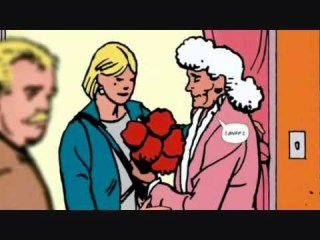
Soft focus in comics feels oddly unnatural, but makes sense.

Motion comics are a relatively new form of comic media. Although early comic-based cartoons used a similar approach. Essentially, it’s the actual art from a comic book that is moved around and manipulated to mimic animation. Early motion comics typically only featured sound cues and music while the panels were simply scanned exactly how they looked on the page. They were then given narration and voice actors to portray the characters. The Watchmen adaptation isn’t the first in the field (that would be Broken Saints) but it’s early enough that it lacks some of the refinement that later motion comics achieved. That said, it does experiment a bit with perspective and some rudimentary movement. Most often, focus is used within a panel so that your attention is fixed on what’s important in the scene. It’s interesting to see something like that in a comic, where it sticks out and seems rather obvious, as opposed to a film where it’s used with such regularity that the average person doesn’t even notice it.

Perhaps the most jarring aspect of this particular piece of media is the voice cast. The story of Watchmen has dozens of characters, all of which have very different mannerisms, styles of speaking and tones of voice. This adaptation features a cast of exactly one actor. Tom Stechschulte plays every single character in this story as well as the narrator. He plays Dan Dreiberg, he plays Rorschach, he plays Dr. Manhattan and he plays Silk Spectre (both of them). Let that sink in for a second. He does a decent job and he has quite a range on his voice, but at the end of the day you’re listening to a dude talk to himself for 2 and a half hours. At best, it sounds like a kid playing with his G.I. Joe’s when none of his friends are able to come over. At worst, it resembles the insane rantings of a dissociative identity disorder sufferer while locked in a padded cell. There’s just no getting around it. The more you try to forget that it’s just one guy, the more you notice the similar tones or inflections that each voice has, it’s really kind of maddening. In some scenes this can get a bit uncomfortable as well, like when Laurie and Dan are getting intimate. Hearing a guy voice a male and female in a love scene is a special kind of weird.

I said initially that 2009 was supposed to be the year of Watchmen. Those who follow such things know that, in fact, it was not. Despite the seemingly undying hype, the film was released to little fanfare from critics and fans. And the studio’s marketing juggernaut quickly lost steam due to a variety of reasons. The general public didn’t have a whole lot of interest in a depressing epic about superheroes’ private lives and even less interest in refrigerator magnets with Ozymandias’s face on them. Add to that the overabundance of merchandise and quality issues with some items (the video game, The End is Nigh, is borderline unplayable) and it’s a wonder that this movie isn’t regarded the same way as Star Wars: Episode 1 in the public’s consciousness. As such, the motion comic was largely ignored or quickly forgotten by the average consumer. While it’s not exactly amazing, it is a valiant attempt and noticeable step in the right direction for the media. I, myself, rather enjoy motion comics and like watching them progress. If only they could have hired a full cast.

Starring Tom Stechschulte! With Special guest, Tom Stechschulte!

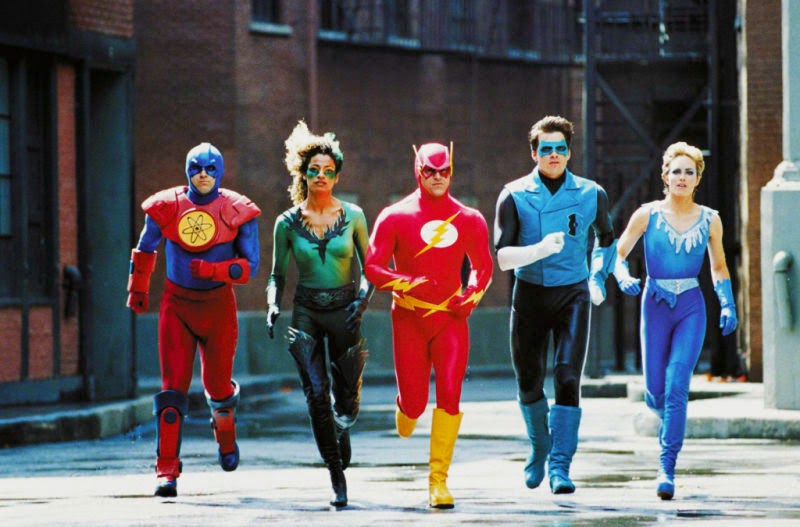
Have you ever heard of an elevator pitch? Now that I provided a helpful link, you should all be saying, “Yes! Of course! Don’t ask condescending questions!” Ok, jeeze. I have watched this pilot more times than I care to admit and one thing keeps running through my mind: what was the elevator pitch for this? I can just imagine some excited executive at CBS breathlessly explaining his grand scheme for this series, “It’s Friends but with superpowers!” And his boss, dollar signs clouding his vision responds with, “Yep. Let’s do it.”
(more…)

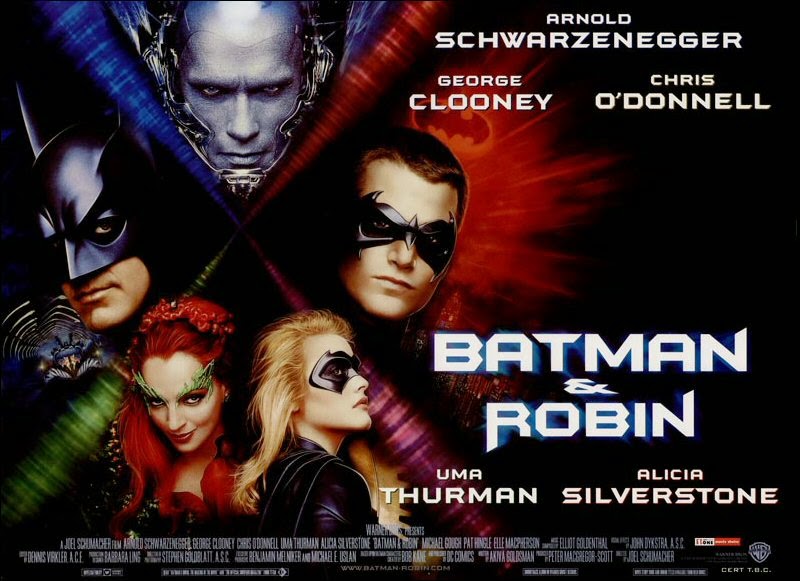
If Superman was the Alpha of comic book movies, Batman & Robin was very nearly the Omega. It was an expensive, garish, day-glo nightmare of a film.
(more…)

Superman (1978 film)

Posted: May 10, 2014 in DC, Richard Donner, Superman


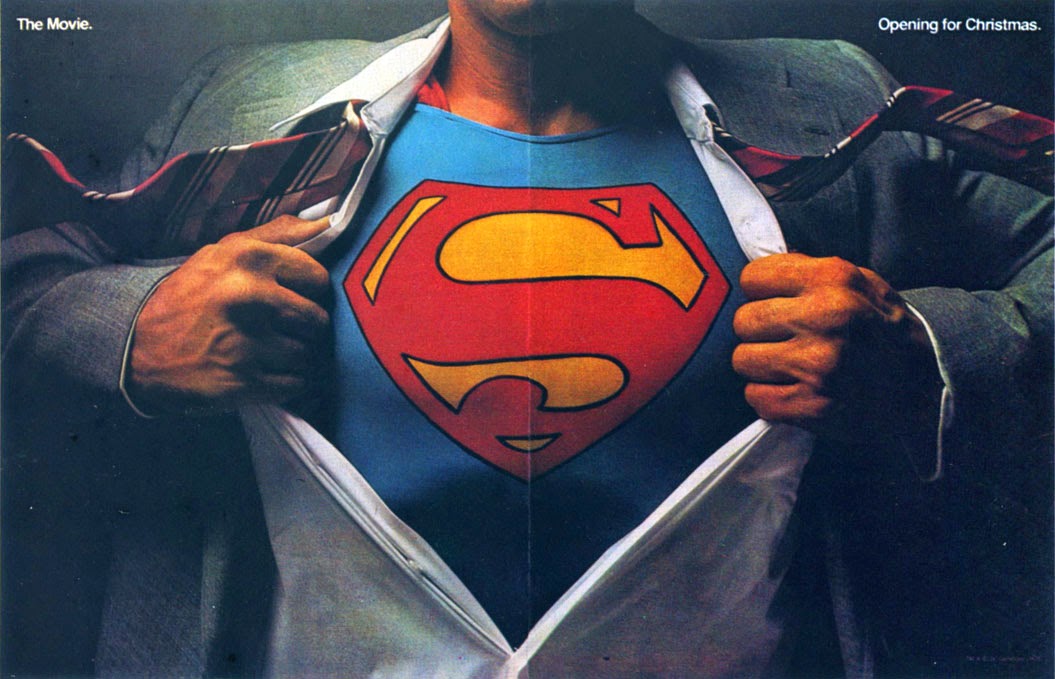
It’s difficult to look back on a movie like Superman without any sort of historical context. The box office landscape today is so shockingly different than it was back then. Because of that, any modern assessment seems too reverent while any critique from a contemporary point of view feels needlessly antiquated. Regardless of what decade you’re watching this film in, there is one word that will always stick with it: important. Superman is an incredibly important comic book movie.

Looking back at it with the assurance of hindsight, it’s hard to understand why this movie was such a gamble. Its script was handled by an incredibly well-respected writer (Mario Puzo) and a recently popular filmmaker (Richard Donner) directed a cast lead by two A-list stars (Gene Hackman and Marlon Brando). Yet, there was no formula for a blockbuster back then, since the age of the blockbuster was still so fresh and new. Star Wars had yet to be released during production and Jaws could have just as easily been a fluke than a signal to a new wave of motion picture trends.

As I type this, I realize that I’m not saying anything that hasn’t been stated a hundred times already or can’t be gleaned from a Wikipedia article. So forgive me for abandoning the earlier history lesson in an attempt to focus on what this film means to me. As a child, I had precious few comic related films to latch onto. There was the Superman series and the 60’s Batman movie (more on that in a later post, I’m sure). The 80’s Batman film came out when I was in kindergarten and was a little too adult for me for a couple of more years. So for the longest time, I had campy, funny Batman (that had a kind of “small” aesthetic) and Superman. In comparison, Superman was grand and felt like a real “movie”. It was the meaty filet mignon to the scrawny cheeseburger of Batman. I remember seeing the VHS box art, “You’ll believe a man can fly”, it promised. And I’ll be damned if I didn’t. That first flight in the Fortress of Solitude, where Superman takes off and banks in front of the camera, is a sight to behold. I’m getting chills remembering it. And THAT is why this film is important. Not because it was first or because it was a blockbuster or because it had a great cast. It’s important because it made people believe in Superman. It made him real.


 “It’s true! You will!!!”

Almost since before the first film was released, DC and Warner Bros. have struggled with successive Superman films. The sequel (which was being filmed at the same time as the first) was taken from original director Richard Donner and was shoddily cut together with new footage filmed by Richard Lester. The less said about the other two films in the franchise, the better (for now at least). And a 2006 return to Donner’s Superman universe was met with praise from critics but mostly “meh”‘s from audiences. In 2013 the Man of Steel was rebooted into a darker, grittier hero and the response was the polar opposite of last outing. So why does the original get so much right, while later installments struggle? Is it simply because it was first? I don’t know. I will leave that open for debate in the comments. And hopefully that concept can be further explored in future posts.

Needless to say, the film left its mark.

                                                         
Random Thoughts

Best line: “You’ve got me! Who’s got you?!”

That whole “Can you read my mind” scene is still a little…off-putting.

Is it possible to see Superman fly and NOT hear John Williams’ theme?

I would still love to see the ending tweaked to fit in with Richard Donner’s cut of Superman 2. Maybe someday…

Well, that’s my first write up. How was it? Too technical? Not technical enough? Please let me know in the comments. I’m still finding my voice here and input is welcome. Help me make this blog SUPER! Get it? Did you get what I did there?


Comic books have come a long way since my childhood. There are many, many reasons for this. First, is an aging demographic base that demands more complicated stories and intricate plotting than when they were children. I am firmly within said demographic. I am 30 now, and easily read more comics than I did when I was 13. I would guess that this is true for most adult comic readers. Thus, the industry works to appease those who spend the money.

The second reason would be the logical evolution of the medium. While comics (meaning pictures and words combined to tell a story) have existed for countless centuries, the concept of a “comic book” or “bandes dessinées” is relatively new when compared to the history of literature and drama. As such, it is still in the early stages of its natural evolution. It has changed greatly in the 75+ years since the creation of the “Super Hero”* and will continue to change even more in the future.

Third, and what I find the most interesting, is the popular and profitable spread of comics into other media. Comic books have a long history in film and television but it has only been recently that they have become such money-making juggernauts. At any given quarter within the last few years, films based upon comics have dominated the box-office and made obscene amounts of money.

The purpose of this blog will be to look back on every piece of comic book media from the realms of film, television, animation and home video. Essentially, reviewing and giving information on each piece of comic book media that is presented. While the artistic and financial triumphs within the medium are worthy of discussion, I am also very interested in the adaptations that failed (either creatively or monetarily) and examine the reasons behind both. This may be considered a daunting task, but if you’ve ever seen my collection of comic-book movies, you’d know that I’m up for it. With that comes the question of what should be examined first…


*Note that the term “Superhero” dates to 1917, but for the purposes of comic based Super-humans, I am tracing it to around the time of the creation of Superman (1938) and Sub-Mariner (1939). Since DC and Marvel collectively hold the copyright to the term “Super Hero”, I think that is appropriate.