Many people in my generation (read: old) have very fond memories of Saturday morning cartoons. Waking up early in order to watch our favorite animated adventures was a way of life that seems to have been pushed to extinction with the advent of 24-hour cartoon channels and streaming services. Everyone had their favorite show back in the day. We all watched all of them, but lines were always drawn. ReBoot was better than Eek the Cat (unless it wasn’t to you). More often than not, X-Men was at the top of everyone’s list. When it was cancelled, it left a bad taste in a lot of fans’ mouths. When a follow-up cartoon was announced, the flavor remained the same. Sure, loyalty to a particular brand of entertainment is great, but fanboys are never good about letting go (hell, I’m still sore about Young Justice being cancelled). Which was really too bad for this show. It wasn’t the same as the original cartoon and didn’t have the slavish devotion to the source material or the same large-scope in its storytelling. But in a lot of ways, it was just as good (if not a bit better) than the original.

“Like, totally radical? Pshh, as if…”

The primary conceit of the show is that it follows the X-Men while they are still inexperienced children (the exceptions being Wolverine, Storm and later Beast who serve as mentors for the core students) being rescued and counseled by Professor X in a world hostile to the newly emerging mutant race. At first glance, that seems like an obvious and cloying attempt to court the youth demographic. However it actually served as a way to add some self-doubt to the heroes that were previously incredibly confident in the past incarnation. Aside from some early episode annoyances (like Kitty Pryde’s voice) it rarely used the youth of the characters to be “hip”.
“That’s cool, I’m in like 12 comics anyway.”

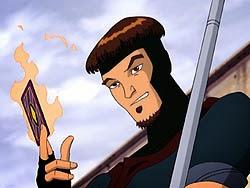
Since I mentioned Kitty Pryde, she’s an excellent example of why this show was so awesome: the cast. The series took the wise step of introducing a new team of X-Men and filling its ranks with a mixture of fan-favorite characters, many of whom had had very little screen time in the past show (or none at all). Aside from regulars like Cyclops, Wolverine and Jean Grey we got characters mostly new to animation like Shadowcat, Berzerker, Nightcrawler and Sunspot. Some characters -*cough*Gambit*cough*- who were fairly overexposed at the time were given smaller guest roles so that less-seen mutants could enjoy a little of the limelight.

Marvel’s Harley Quinn

And of course, this show cannot be discussed without mentioning X-23. When the clone of Wolverine debuted, she was met with trepidation from most fans. Dismissing that her introductory episode was very well done, its understandable that the decision to introduce a young, cool version of Logan caused some unease (if not outright agitation) from fans. And yet, she turned into a fan-favorite character, largely due to her complicated personality and haunting backstory. She was a clone raised in solitude (after 22 failed attempts) and trained/tortured to become an assassin for Hydra. When she was 12, she was put through the Weapon X process. You know, the one that was absolute torture and almost killed an adult Wolverine? Yeah, they did it to a kid. The depth of her conditioning and the question of “what makes someone good or evil” is the core of her story and essential to what makes her an intriguing character. It’s incredibly refreshing to see what could have been a largely disappointing and obvious trope be so fully subverted.

The series lasted 4 seasons (making it Marvel’s 3rd longest running cartoon) and ended on quite the high-note. The X-Men, Brotherhood, SHIELD and other random characters all join forces in an effort to thwart the subjugation of the human race by the ancient mutant Apocalypse. The excellent finale’s final moments give a glimpse of all of the triumphs and losses we’ll never see in the team’s future before settling on a class picture of the extended X-Men roster. Even for an old cynic like me, it was touching.  
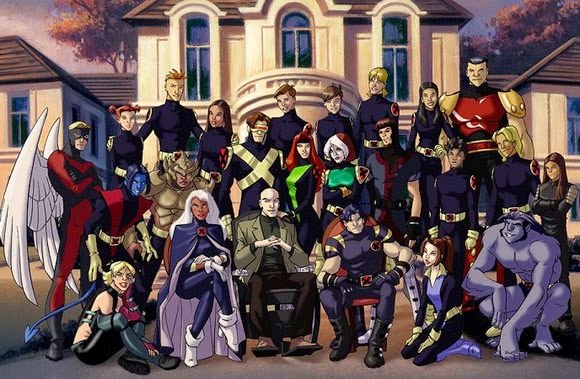
Class of 2003
Sadly, this series is rarely thought of by fans today. X-Men is fondly (and rightly) remembered for how groundbreaking it was and Wolverine and the X-Men is still being mourned for its short but dramatic run in 2009. I love both of those series, but as far as I’m concerned, the X-Men are 3 for 3 in television and now that this series is streaming on Netflix in its entirety, hopefully more people will give it a chance.

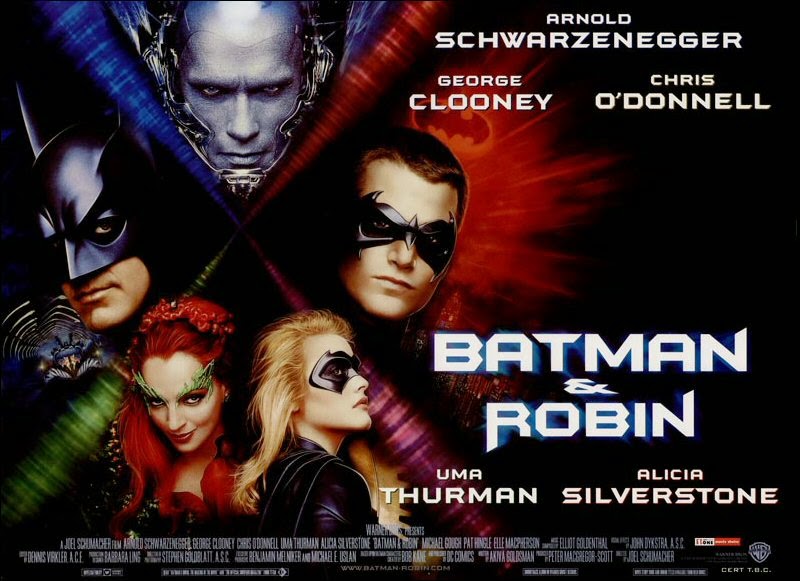
If Superman was the Alpha of comic book movies, Batman & Robin was very nearly the Omega. It was an expensive, garish, day-glo nightmare of a film.
Read the rest of this entry »

Superman (1978 film)

Posted: May 10, 2014 in DC, Richard Donner, Superman


It’s difficult to look back on a movie like Superman without any sort of historical context. The box office landscape today is so shockingly different than it was back then. Because of that, any modern assessment seems too reverent while any critique from a contemporary point of view feels needlessly antiquated. Regardless of what decade you’re watching this film in, there is one word that will always stick with it: important. Superman is an incredibly important comic book movie.

Looking back at it with the assurance of hindsight, it’s hard to understand why this movie was such a gamble. Its script was handled by an incredibly well-respected writer (Mario Puzo) and a recently popular filmmaker (Richard Donner) directed a cast lead by two A-list stars (Gene Hackman and Marlon Brando). Yet, there was no formula for a blockbuster back then, since the age of the blockbuster was still so fresh and new. Star Wars had yet to be released during production and Jaws could have just as easily been a fluke than a signal to a new wave of motion picture trends.

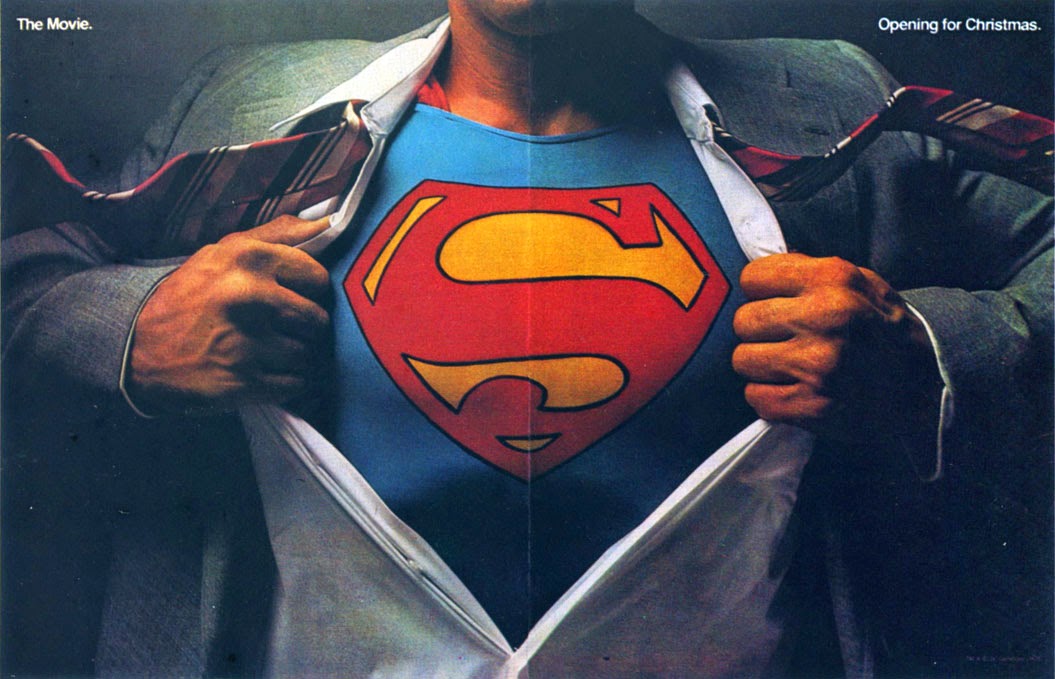
As I type this, I realize that I’m not saying anything that hasn’t been stated a hundred times already or can’t be gleaned from a Wikipedia article. So forgive me for abandoning the earlier history lesson in an attempt to focus on what this film means to me. As a child, I had precious few comic related films to latch onto. There was the Superman series and the 60’s Batman movie (more on that in a later post, I’m sure). The 80’s Batman film came out when I was in kindergarten and was a little too adult for me for a couple of more years. So for the longest time, I had campy, funny Batman (that had a kind of “small” aesthetic) and Superman. In comparison, Superman was grand and felt like a real “movie”. It was the meaty filet mignon to the scrawny cheeseburger of Batman. I remember seeing the VHS box art, “You’ll believe a man can fly”, it promised. And I’ll be damned if I didn’t. That first flight in the Fortress of Solitude, where Superman takes off and banks in front of the camera, is a sight to behold. I’m getting chills remembering it. And THAT is why this film is important. Not because it was first or because it was a blockbuster or because it had a great cast. It’s important because it made people believe in Superman. It made him real.


 “It’s true! You will!!!”

Almost since before the first film was released, DC and Warner Bros. have struggled with successive Superman films. The sequel (which was being filmed at the same time as the first) was taken from original director Richard Donner and was shoddily cut together with new footage filmed by Richard Lester. The less said about the other two films in the franchise, the better (for now at least). And a 2006 return to Donner’s Superman universe was met with praise from critics but mostly “meh”‘s from audiences. In 2013 the Man of Steel was rebooted into a darker, grittier hero and the response was the polar opposite of last outing. So why does the original get so much right, while later installments struggle? Is it simply because it was first? I don’t know. I will leave that open for debate in the comments. And hopefully that concept can be further explored in future posts.

Needless to say, the film left its mark.

                                                         
Random Thoughts

Best line: “You’ve got me! Who’s got you?!”

That whole “Can you read my mind” scene is still a little…off-putting.

Is it possible to see Superman fly and NOT hear John Williams’ theme?

I would still love to see the ending tweaked to fit in with Richard Donner’s cut of Superman 2. Maybe someday…

Well, that’s my first write up. How was it? Too technical? Not technical enough? Please let me know in the comments. I’m still finding my voice here and input is welcome. Help me make this blog SUPER! Get it? Did you get what I did there?


Comic books have come a long way since my childhood. There are many, many reasons for this. First, is an aging demographic base that demands more complicated stories and intricate plotting than when they were children. I am firmly within said demographic. I am 30 now, and easily read more comics than I did when I was 13. I would guess that this is true for most adult comic readers. Thus, the industry works to appease those who spend the money.

The second reason would be the logical evolution of the medium. While comics (meaning pictures and words combined to tell a story) have existed for countless centuries, the concept of a “comic book” or “bandes dessinées” is relatively new when compared to the history of literature and drama. As such, it is still in the early stages of its natural evolution. It has changed greatly in the 75+ years since the creation of the “Super Hero”* and will continue to change even more in the future.

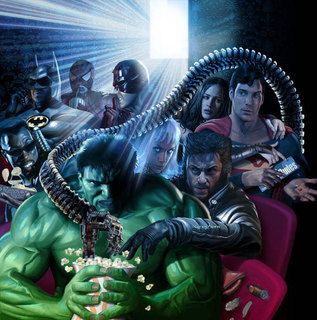
Third, and what I find the most interesting, is the popular and profitable spread of comics into other media. Comic books have a long history in film and television but it has only been recently that they have become such money-making juggernauts. At any given quarter within the last few years, films based upon comics have dominated the box-office and made obscene amounts of money.

The purpose of this blog will be to look back on every piece of comic book media from the realms of film, television, animation and home video. Essentially, reviewing and giving information on each piece of comic book media that is presented. While the artistic and financial triumphs within the medium are worthy of discussion, I am also very interested in the adaptations that failed (either creatively or monetarily) and examine the reasons behind both. This may be considered a daunting task, but if you’ve ever seen my collection of comic-book movies, you’d know that I’m up for it. With that comes the question of what should be examined first…


*Note that the term “Superhero” dates to 1917, but for the purposes of comic based Super-humans, I am tracing it to around the time of the creation of Superman (1938) and Sub-Mariner (1939). Since DC and Marvel collectively hold the copyright to the term “Super Hero”, I think that is appropriate.